
Science Explained Beef Rendang
Dry Minangkabau-style beef rendang — made with the help of science

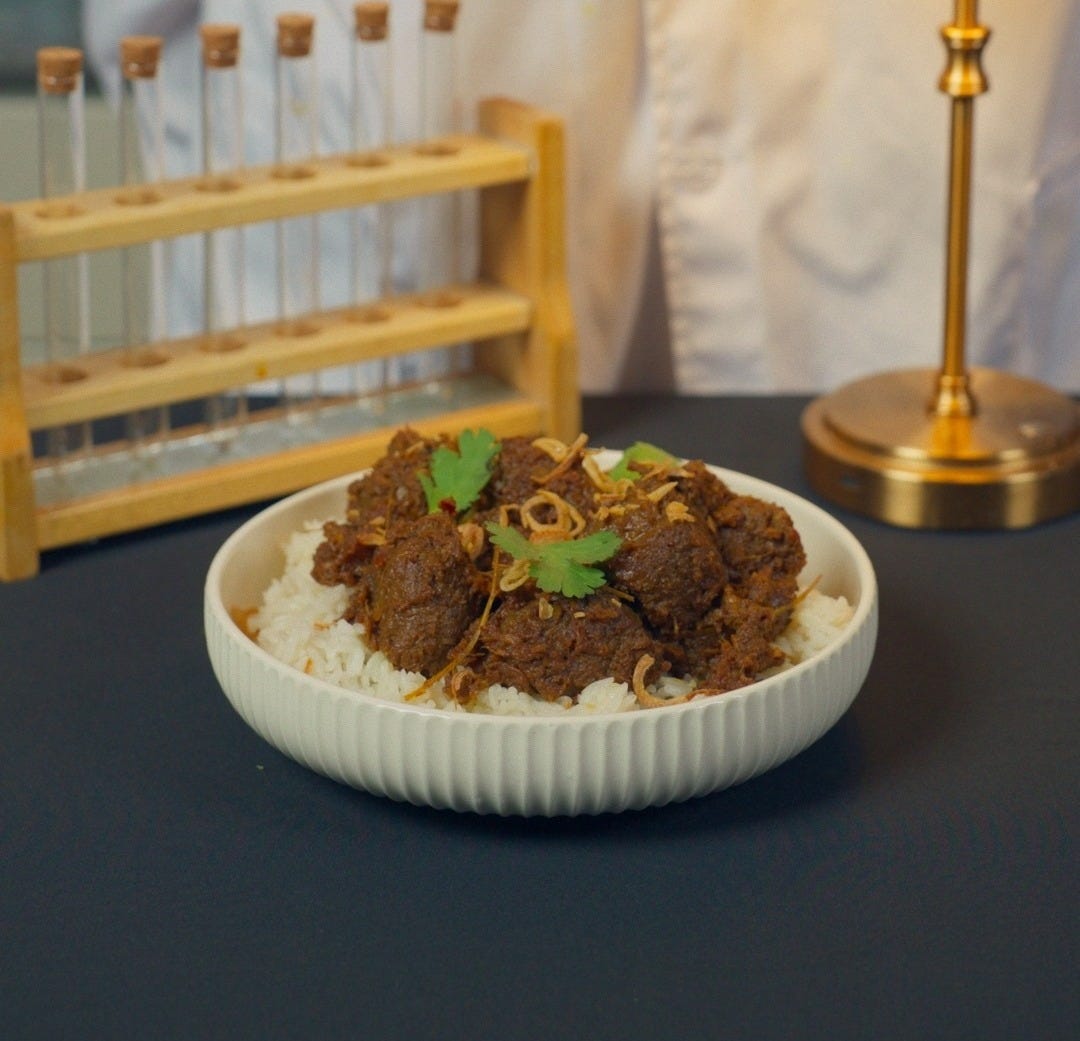
Beef rendang is one of my favourite curries. If anything, it’s probably my top three curries. It’s flavorful. It’s dry. It’s packed with beautiful aromatics, and it’s something you’ve probably never tried before. It being my favourite is the reason why I wanted to really go in depth on why this dish is incredible. Today’s recipe shows each important step and why we do each step.
I had a pot of gorgeous, tender, golden, coconutty beef, glossy, rich, smelling incredible and it was good! but It was also not rendang. What I’d actually made was kalio: the wet, saucy halfway house that rendang passes through on its way to becoming the real thing. Rendang is what happens after that, when you hold your nerve and keep cooking past the point where it looks done, past the point where it looks like you might be ruining it until the sauce vanishes entirely and the beef starts to fry in its own spiced coconut oil and turns a deep, dark, almost mahogany brown.
Rendang is regularly named among the most delicious dishes in the world, and for years mine was merely nice. It was always too pale, too saucy, too soft. The flavour was good but it was a coconut beef curry, not the intense, dry, spice-crusted thing I’d eaten and never forgotten. And every single time, the reason was the same: I stopped too early. The final dry-down looked alarming and the pot looked like it was about to catch and burn.
The turning point, as always on this Substack, was understanding what’s actually happening in that scary final stage. Once I understood that the dry-down isn’t stewing at all (it’s frying) and why the dish genuinely needs every minute of it, rendang stopped being a gamble. It’s a long cook, but it’s a forgiving one, as long as you trust the process and don’t reach for the water.
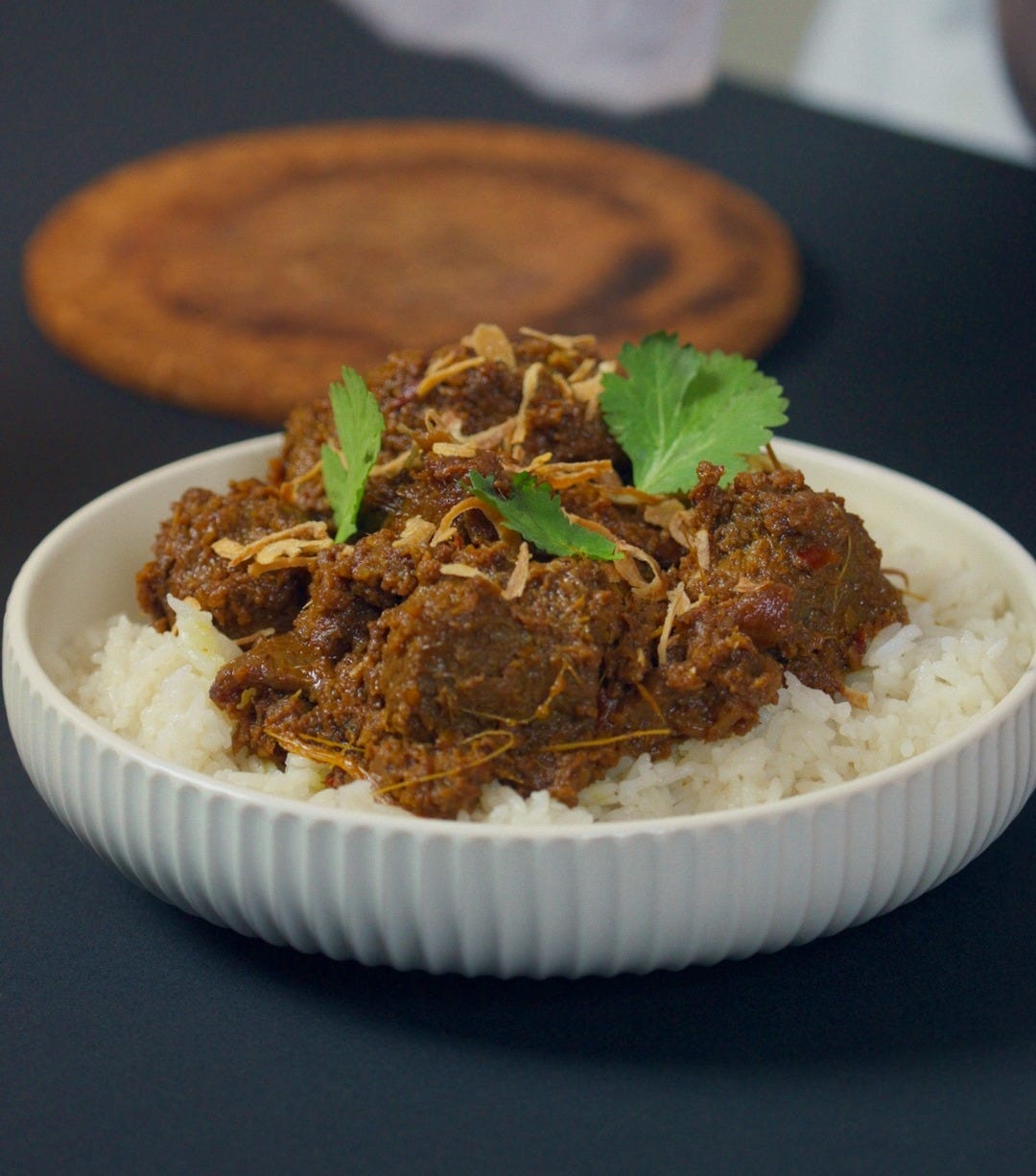
So here’s the version I make now, and the reasoning behind every part of it.
The recipe without science and pictures is at the bottom.
The objectives of perfect rendang
1. A rempah that’s been fried until the oil cracks. Rendang has no stock and no shortcuts. The spice paste, the rempah, is the flavour of the entire dish. Blending all the aromatics smooth bursts open their cells and releases their flavour, and then frying that wet paste for a good 10–15 minutes does the real work: it cooks off the harsh, raw edge of the garlic, shallot and turmeric, drives off the water, and browns the aromatics into something deep and savoury. The signal you’re looking for is the oil splitting out and pooling at the edges aka pecah minyak, “broken oil.” Rush this and the whole dish tastes flat and raw underneath everything else.
2. Kerisik — the toasted coconut that makes rendang rendang. This is the single ingredient that separates a real rendang from a generic coconut curry, and most recipes skip it. You toast desiccated coconut in a dry pan until it’s deep golden and intensely nutty, then grind it until it releases its oil and turns into a dark, coarse paste. It thickens the sauce, adds a roasted depth nothing else can, and helps give rendang its signature dry, clinging coat.
3. Beef that braises tender, then fries dark. Chuck is the cut, because rendang’s whole identity is the long cook. The first stage a gentle, uncovered simmer in coconut milk which slowly melts the tough connective tissue in the beef into soft gelatin, which is what makes it tender and gives the sauce that lip-coating body. Then, at the very end, the same pieces fry in the leftover oil and brown properly.
4. The dry-down — the defining stage, and the one everyone cuts short. This is where rendang is actually made. You drive off every last bit of liquid until the coconut oil separates out, and then the beef genuinely fries in that spiced oil, the sugars caramelise, and the coating turns deep mahogany and wraps every piece. It looks alarming. It is not. Stop early and you’ve made kalio; push through and you’ve made rendang. The only real failure here is impatience and adding water to “rescue” a pot that’s supposed to be going dry.
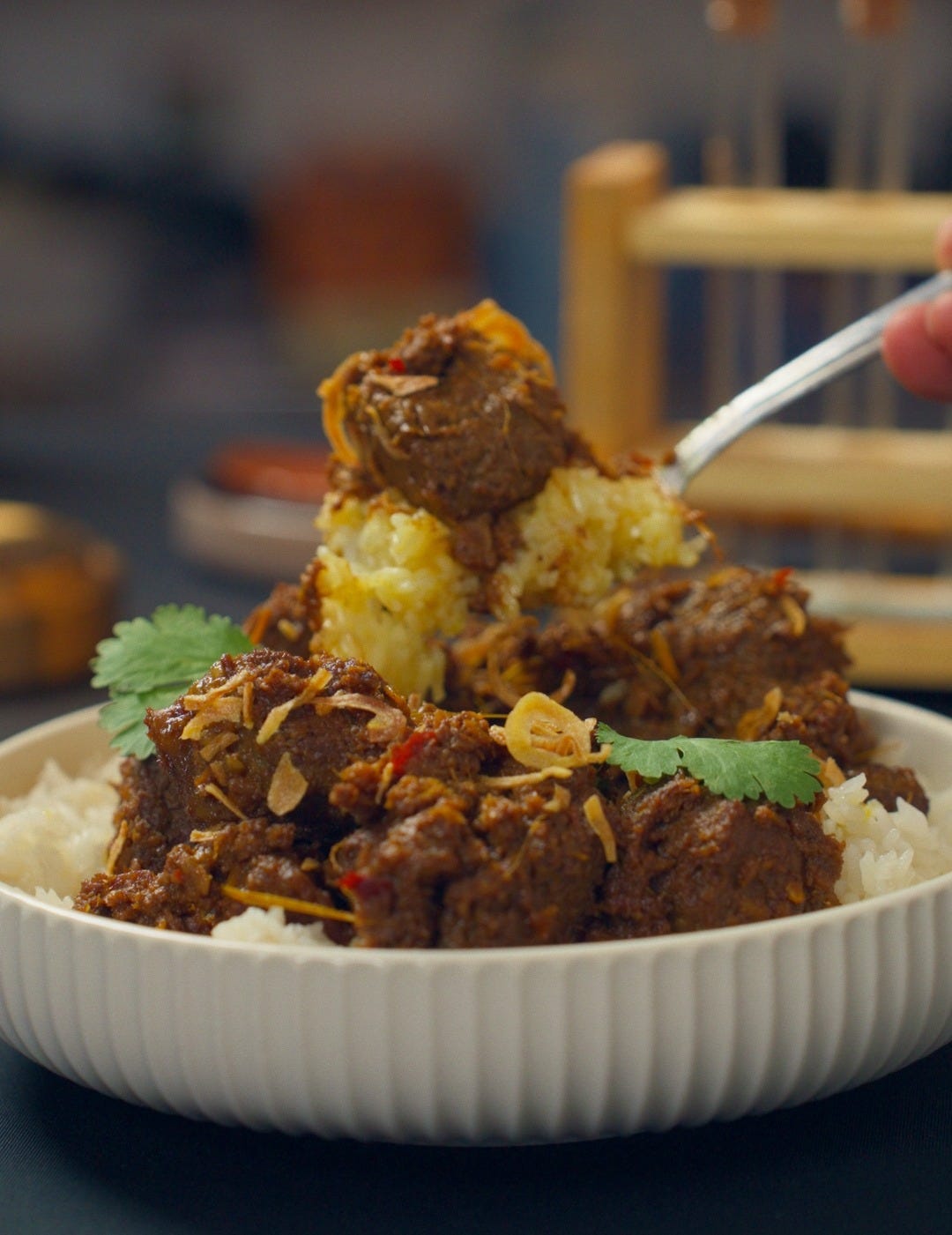
Recipe — with science explanation
Serves 4–6 — allow about 3½–4 hours, mostly hands-off until the end
Ingredients
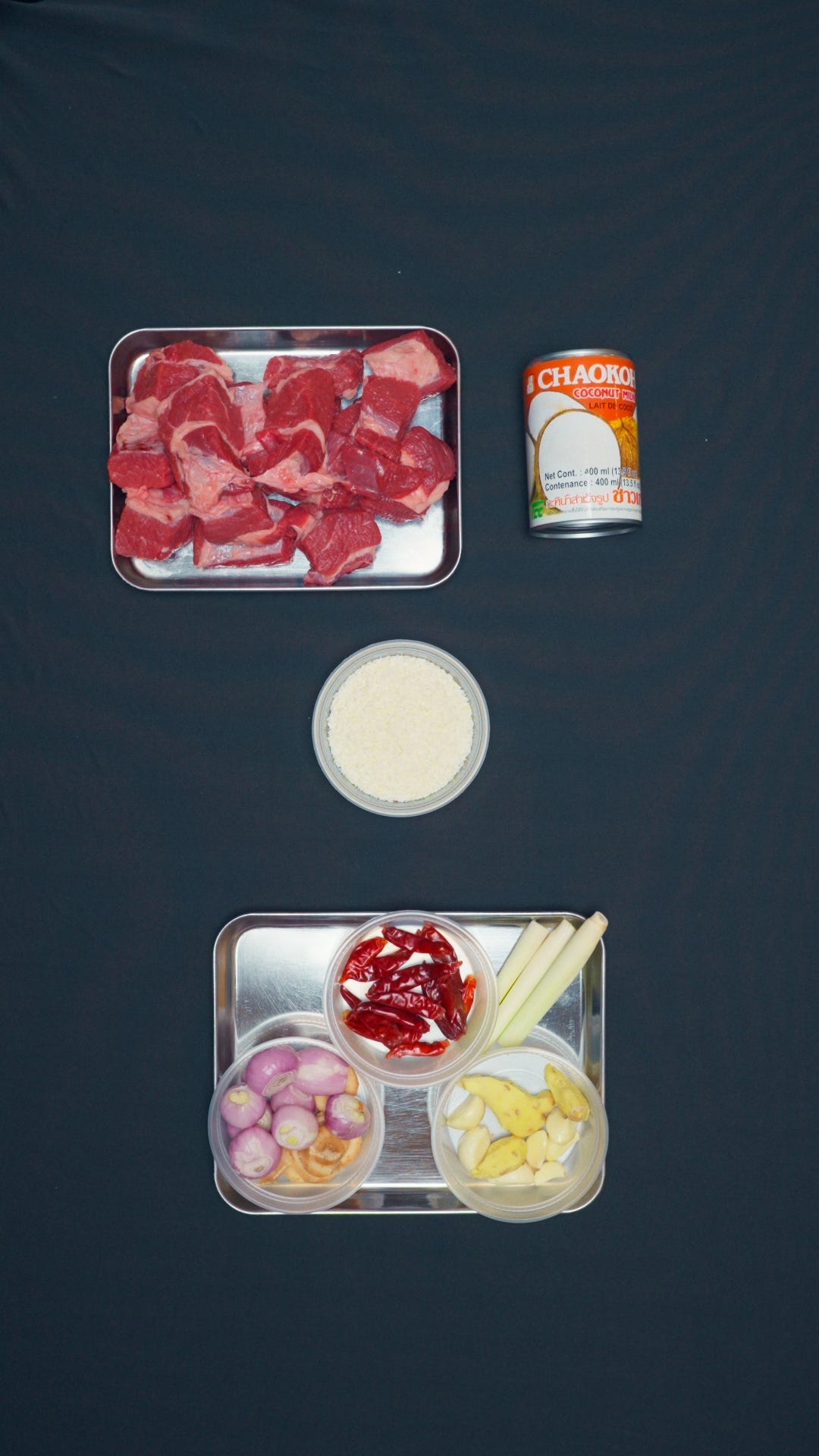
The rempah (spice paste)
10 dried red chillies (mild, e.g. Kashmiri/spur), rehydrated
8 shallots, peeled
6 garlic cloves, peeled
30g fresh ginger, peeled
40g galangal, peeled
3 lemongrass stalks, white part only
15g fresh turmeric (or 1 tsp ground)
5 candlenuts or macadamia nuts
