

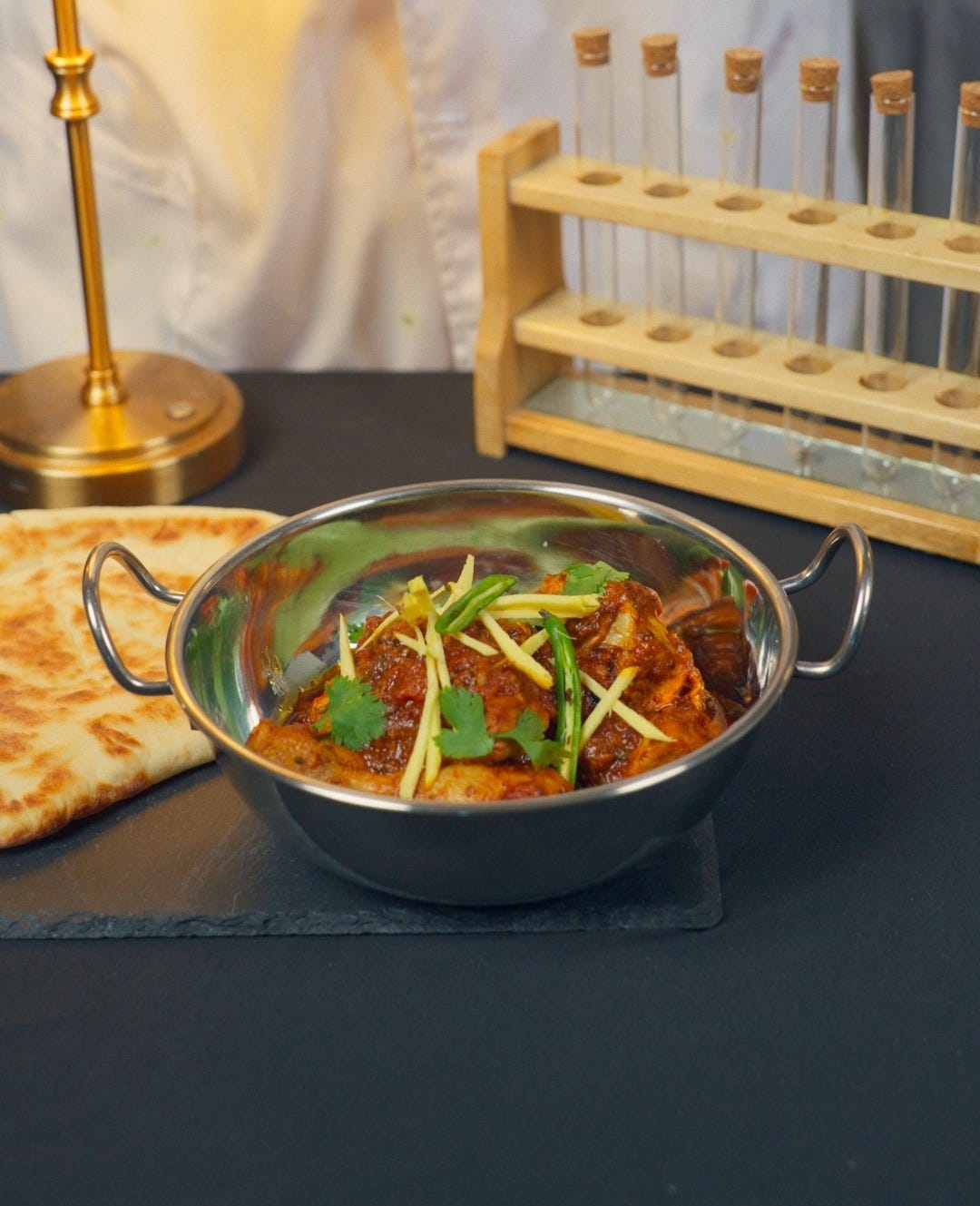
The first time I had a proper chicken karahi, it arrived at the table still bubbling in the same black wok it was cooked in.
My karahi was always fine. It was also always a curry, and karahi isn’t a curry. A curry has a sauce; karahi has a masala that clings to the meat in a glossy, oil-slicked coat. Mine came out pale and watery, the tomatoes never quite broke down, the chicken was somehow both bland and overcooked, and the whole thing tasted thin no matter how much chilli I threw at it. I assumed I was missing some secret ingredient.
I wasn’t. What I was missing was an understanding of one technique whic was the Bhuna and a willingness to leave out the two things almost every Western recipe tells you to add: onion and water. A proper Pakistani karahi has neither. The whole dish is built to showcase the tomato-ginger-chilli trinity, and once I understood the chemistry of what bhuna actually does to a tomato masala, this dish stopped fighting me.
So here’s the version I make now, and the reasoning behind every part of it.
The recipe without science and pictures is at the bottom.
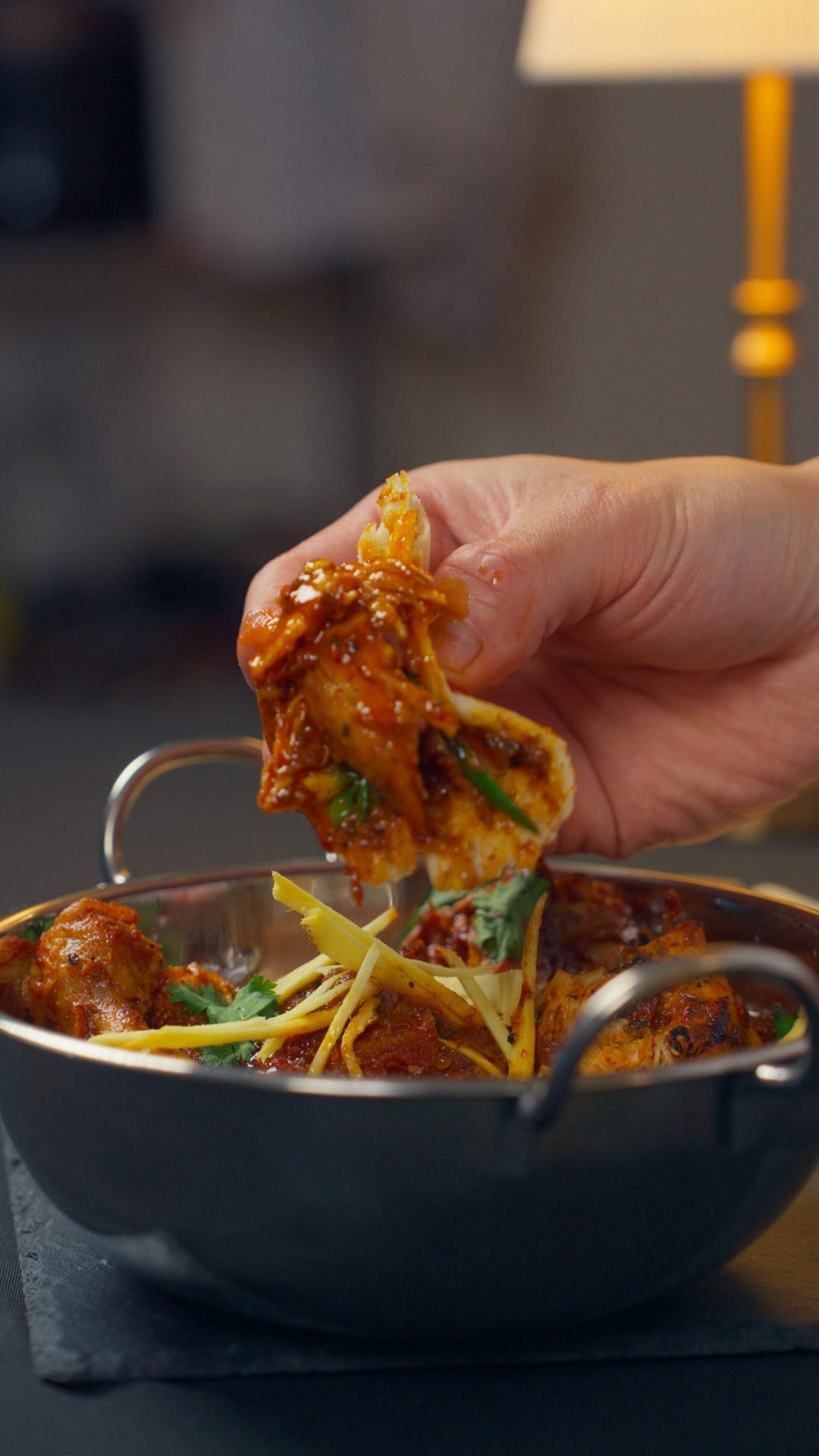
The objectives of perfect chicken karahi
1. A masala that clings, not a gravy that pools. This is the whole game, and it’s the thing that separates karahi from every weeknight curry. The defining technique is bhuna which means literally “to fry” where you cook the tomato masala on high heat until the oil physically separates out and pools at the edges. Here’s what’s going on: at the start, the masala is mostly water, with the fat mixed all through it. As you cook on high heat, that water boils away, and once enough is gone the fat can’t stay mixed in any more — so it splits out as a distinct red-orange layer. That visible split is your signal the masala is properly concentrated, and it also means the pan can finally get hotter than boiling water, which is when the deep, browned flavour really starts to build. Skip or rush the bhuna and you get the pale, watery, flat-tasting karahi I made for years.
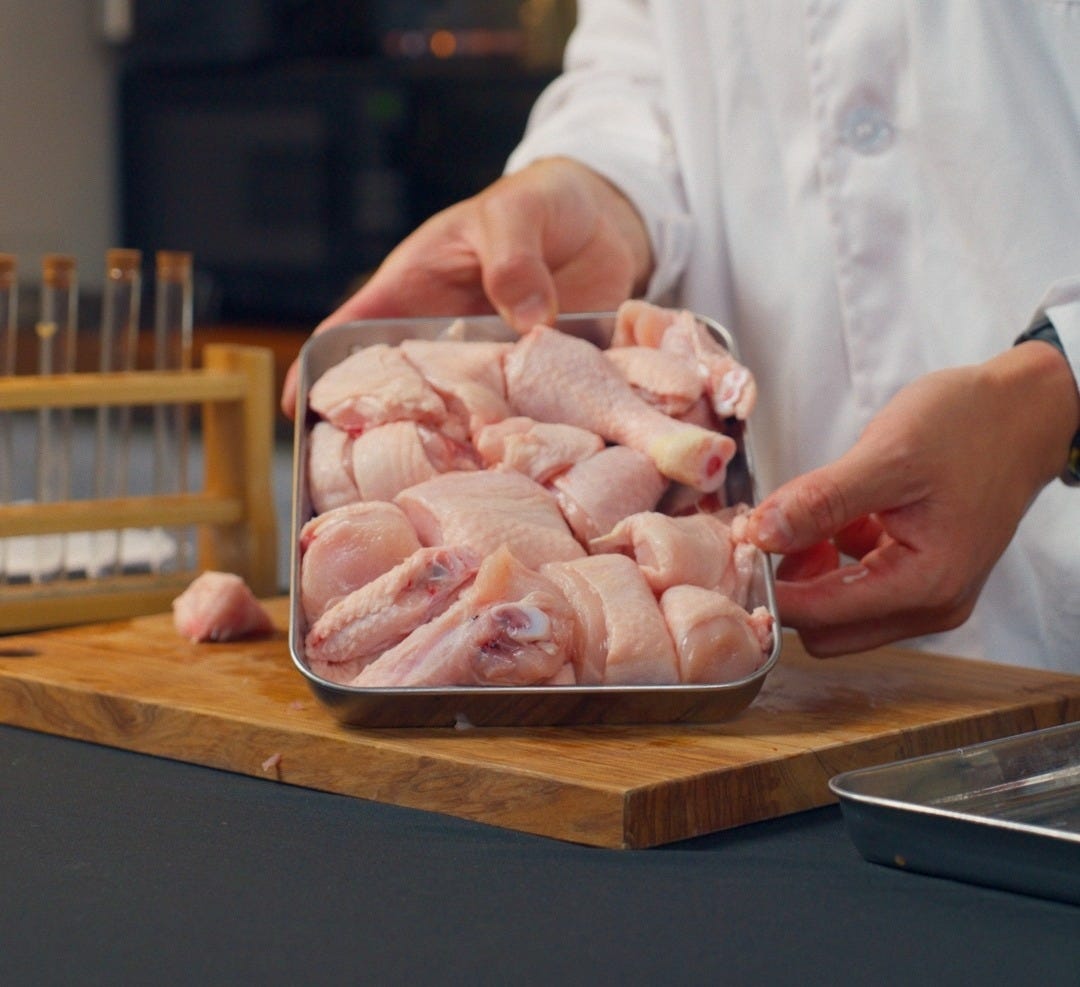
2. Chicken that’s seared hard and stays juicy — on the bone. Bone-in, skinless, cut small. The small “karahi cut” gives you lots of surface area for browning, and that’s where the flavour lives. The bones release gelatin and marrow into the masala as it cooks, giving the whole thing a body that boneless chicken simply can’t. Searing dry and hard builds deep, browned flavour and forms a light crust that helps the meat hold on to its juices during the cook.
3. The trinity, layered for depth and freshness — no onion. Tomato, ginger, chilli. That’s the backbone, and authentic karahi leaves the onion out entirely so nothing muddies it. Tomatoes are loaded with natural savouriness, the same moreish quality you get from MSG and they amplify the meatiness of the chicken. Ginger goes in twice: cooked into the base for mellow warmth, and raw at the end for a sharp, fresh bite. The chillies do the same, cooked-down chillies give round, soft heat; raw ones scattered on top give a clean, bright kick.
4. Tang and richness from yogurt — without it curdling. A small amount of yogurt adds creaminess and a gentle sourness that balances the fat, but yogurt thrown into a screaming-hot acidic pan curdles into white flecks instantly. The fix is pure technique: whisk it smooth, temper it with hot oil from the pan, then stream it in slowly. Done right, it disappears into the masala as a silky tang rather than splitting.
Recipe — with science explanation
Serves 4 — allow about an hour from start to finish
Ingredients
The chicken
1kg bone-in skinless chicken, karahi-cut into 12–16 small pieces
The base
800g ripe Roma or plum tomatoes, halved
2 tbsp fresh ginger-garlic paste (50/50)
4 green chillies (Thai or serrano), slit lengthwise
3 tbsp ghee
3 tbsp neutral oil (sunflower or canola)
The spices
1 tsp coriander seeds
1 tsp cumin seeds
1 tsp black peppercorns
1.5 tsp Kashmiri red chilli powder
0.3 tsp turmeric powder
1 tsp red chilli flakes
1.5 tsp fine sea salt
