

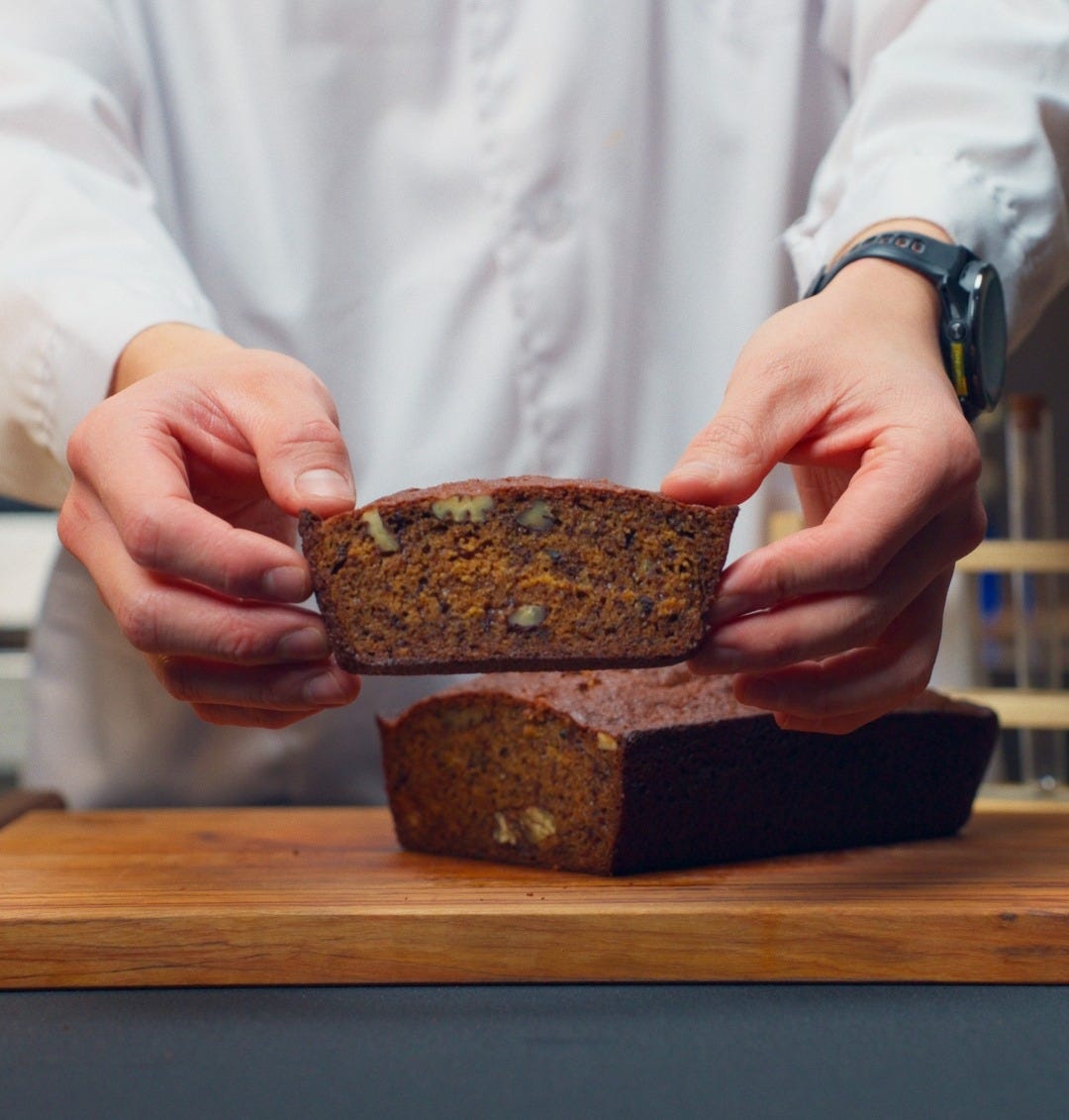
Banana bread looks simply but when you deep it it is actually controlled chemical system. Here i will be breaking down every step and ingredient and how that affects the moisture, structure, sweetness and the aroma of one of my favourite baked goods. Ive designed this recipe so that it is fool proof, every step is considered to help you make a really good banana bread!
As banana’s ripen the starches converts into sugars, increasing the sweetness whilst also changing how the water is held inside the batter. Even the sugar selection is important because it controls the tenderness, moisture retention and browning! Fat coats flour proteins which also limi gluten formation and thus determines whether the crumb is soft or rubbery. All these factors i will go into more detail as you follow the recipe :)
The recipe is designed to work with those processes and nothing here is accidental. The ratios are chosen to maximise moisture without collapse, sweetness without cloying and the structure without dryness. The method controls heat transfer so the loaf sets evenly and browns deeply. I’ve store this for a week now and the bread is still moist and delicious!
This banana bread is build on food science, not guesswork. When you understand why things happen the way they do you can repeat each step perfectly every time and adjust it with confidence rather than hope.
I have also listed some of the references at the end i used to back this up
I hope you enjoy the recipe and let me know how it tastes, look and feel! Share these on your socials and @dumpedlingss if you feel it is worthy to your taste.
Recipe
Ingredients (Serves 6-8)
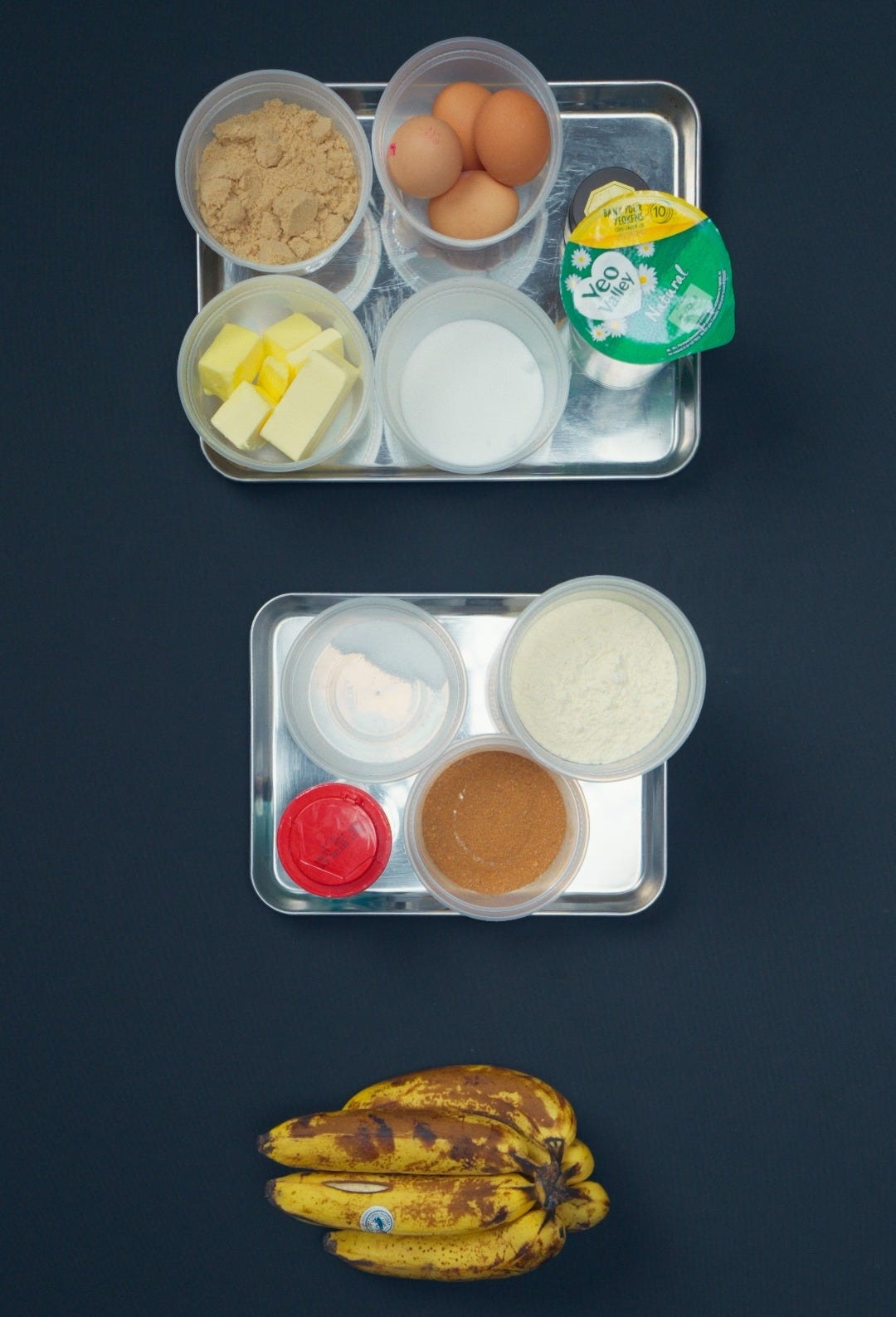
Ingredients list:
Wet Ingredients
3 very ripe bananas (≈300 g peeled)
120 g brown sugar
60 g white sugar
2 large eggs (room temperature)
80 g melted unsalted butter (heated in a pot and cooled)
60 ml full fat yogurt or sour cream
1 tsp vanilla extract
Dry Ingredients
190 g all purpose flour
1 tsp baking soda
½ tsp salt
• • 1 tsp cinnamon (optional)
Additional ingredients
80g Pecans
Scientific reasoning behind the ingredients
Banana selection
Banana selection is one of the most important things of banana bread (dduuuuuhh Daniel) and selecting it can dictate your whole banana bread recipe. Here to want to carefully ripen your banana’s until its brown like below.
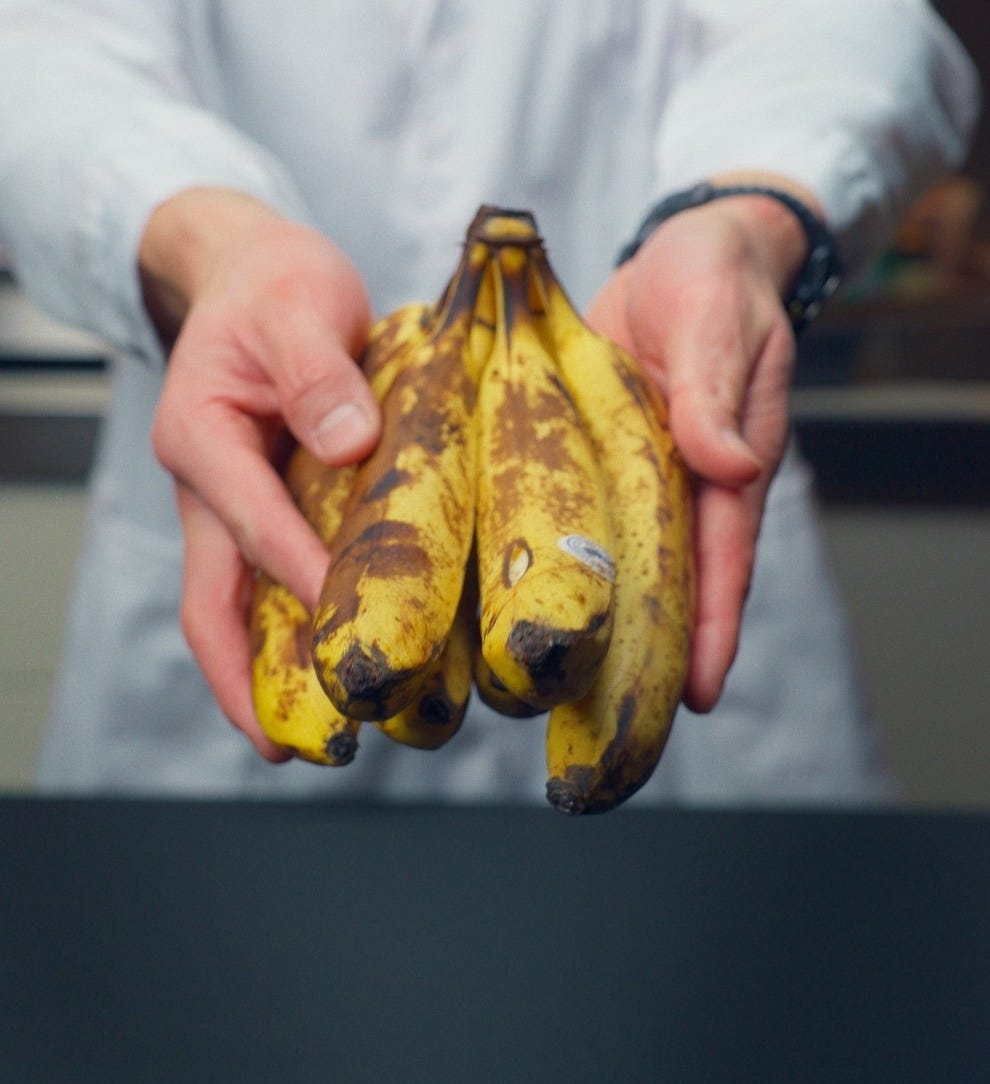
3 very ripe bananas (≈360 g peeled)
Science: As bananas ripen, starch converts into simple sugars (glucose, fructose, sucrose). This increases sweetness, moisture retention, and Maillard browning during baking.
Wet Ingredients
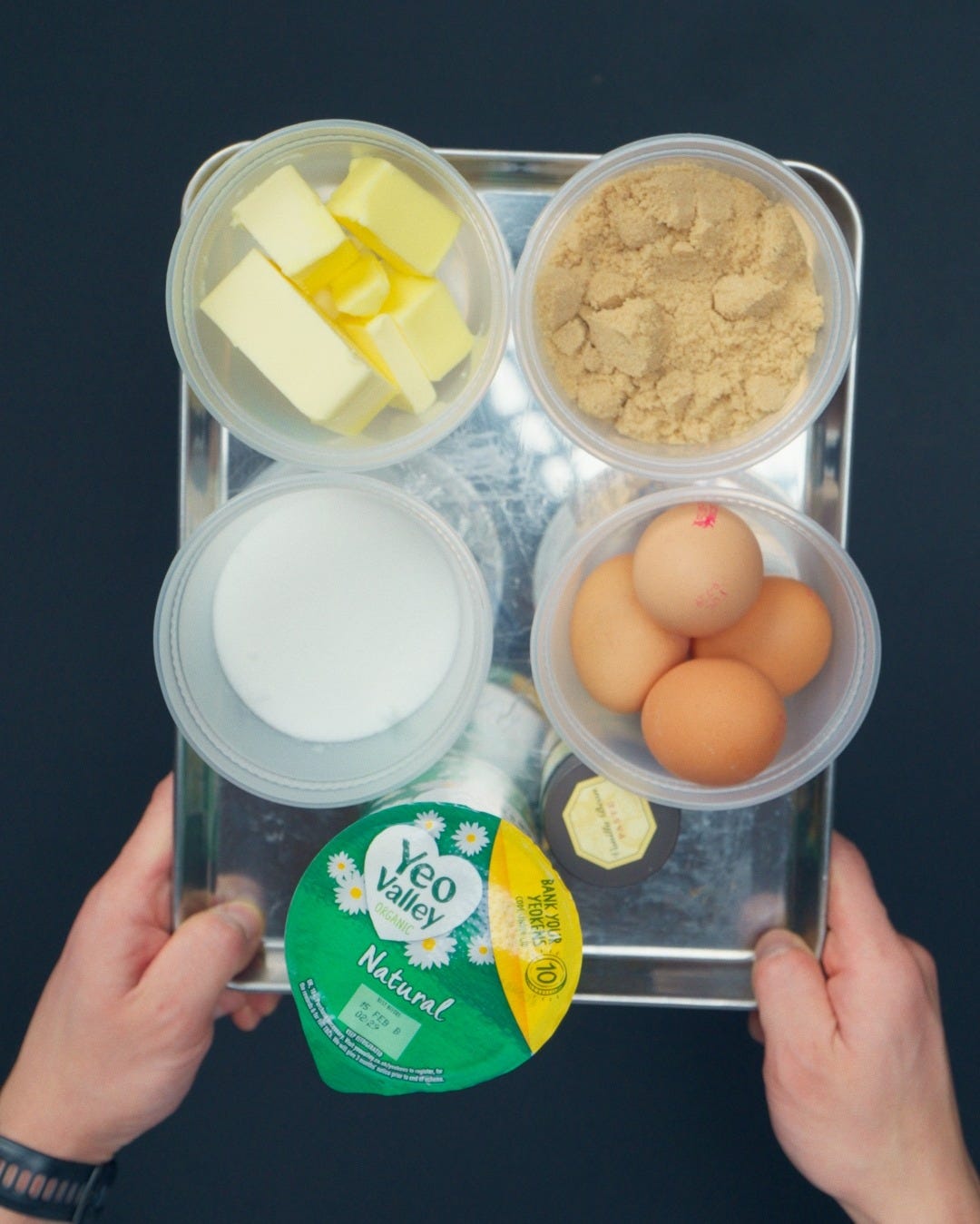
120 g brown sugar
Science: Brown sugar contains molasses, which is hygroscopic and so It attracts water molecules, keeping the crumb moist for days and enhancing caramelised flavours.
60 g white sugar
Science: White sugar promotes cleaner sweetness and improves crumb tenderness by interfering with gluten formation.
2 large eggs (room temperature)
Science: Eggs provide emulsification (lecithin), structure (coagulating proteins), and moisture. Room temperature eggs emulsify more efficiently, giving a finer crumb.
80 g melted unsalted butter (cooled)
Science: Butter contributes fat which coats flour proteins, limiting gluten development and creating tenderness. Melting removes air bubbles so the crumb stays tight rather than cake airy.
60 ml full fat yogurt
Science: Adds acidity which activates baking soda, improves tenderness, and slows starch retrogradation (banana bread stays softer longer).
1 tsp vanilla extract
Science: Vanilla contains volatile aroma compounds that enhance perceived sweetness without adding sugar.
Dry Ingredients
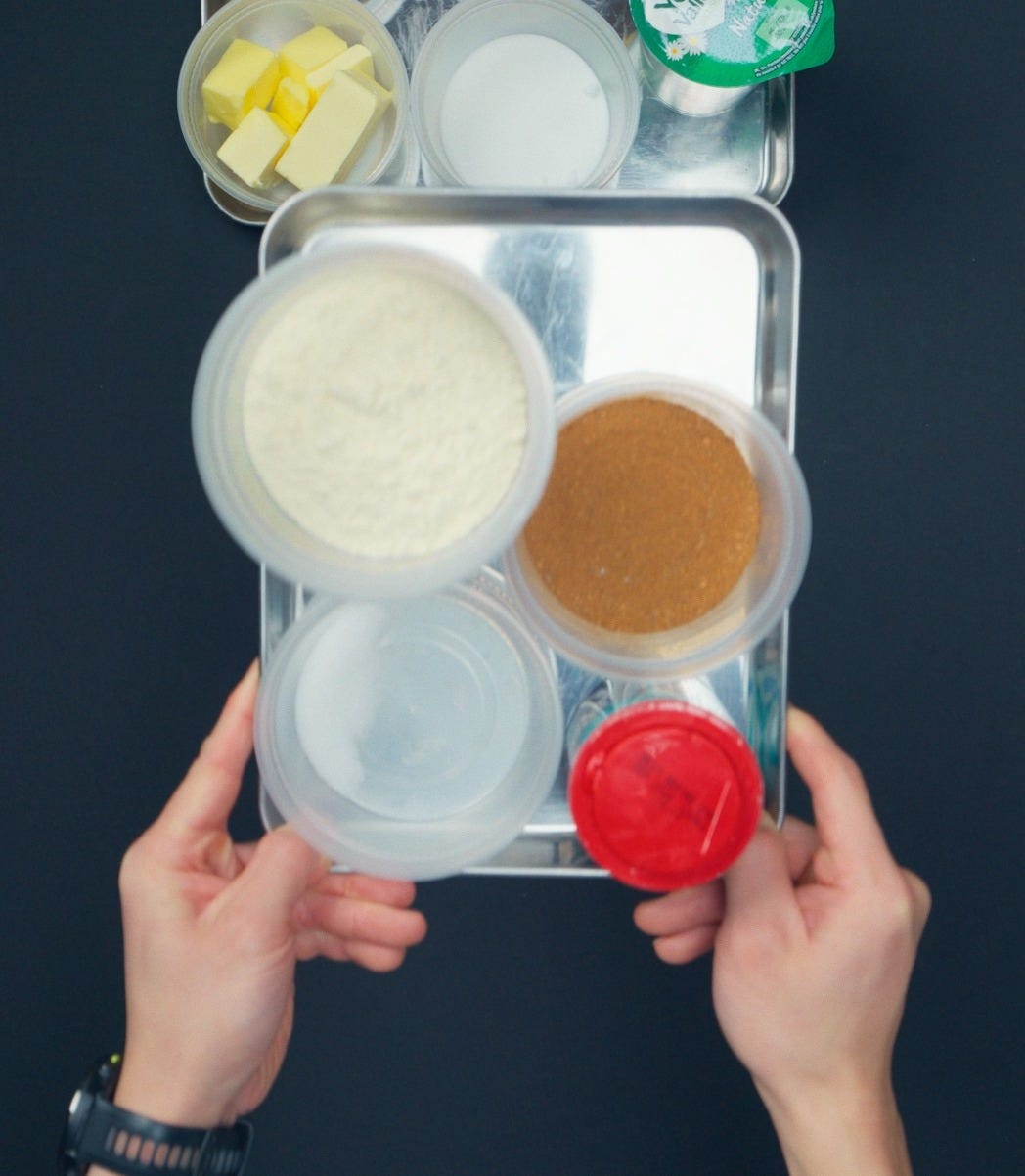
190g Plain/All purpose flour
Science: We chose this flour because the moderate protein content gives enough structure without toughness.
1 tsp baking soda
Science: Sodium bicarbonate reacts with acidic ingredients (banana, yogurt) to produce CO₂ gas, creating lift.
½ tsp salt
Science: Salt strengthens gluten networks and enhances flavor perception by suppressing bitterness.
1 tsp cinnamon (optional)
Science: Cinnamon contains cinnamaldehyde, which reinforces sweetness and warmth through aroma chemistry.
Nuts selection and Amount (this matters)
80–100 g pecans, roughly chopped
Science:
This ratio adds texture and fat without disrupting the starch–protein network that holds the loaf together. More than this creates structural weak points and can cause collapse.
Method with Scientific explanation
Step 1: Grease your 8x3 inch loaf tin and pre-heat oven
First step is to prepare your station. Grease a 8x3 inch loaf tin and pre-heat your oven to 175 degrees celcius (350°F)


Science: Greasing a baking tin with butter creates a fat-based barrier between the batter and the metal, and that barrier controls adhesion, heat transfer, and flavor development at the surface
Step 2: Peel and Mash the bananas thoroughly
Peel your bananas and place them in a large mixing bowl and then mash thoroughly. You will start to see the banana’s turn liquidy. This is super important that you mash until it reaches this liquid consistency.


Science: Smaller banana particles distribute sugars evenly and release more free water, increasing moisture and uniform sweetness throughout the loaf.
Step 3: Whisk sugars into the bananas
Add your brown and white sugars and you want to whisk these until it becomes super liquidy and glossy. This is a sign that the sugas are fully dissolved in the bananas


Science: Dissolving sugar early helps it bind water molecules. This delays starch gelatinisation during baking, producing a softer crumb.
Step 4: Add eggs and emulsify
Now whisk your eggs one at a time. Cracking an egg and then whisking and repeating until all eggs are complete (which is two rounds)


Science: Gradual incorporation allows lecithin in egg yolks to form a stable emulsion between fats and water, preventing greasy pockets.
Step 4: Add melted butter, yogurt, and vanilla
Heat butter in a pot and allow it to cool (around 10 minutes) then add Vanilla bean paste or extract, full fat yogurt and your melted butter. Gently fold these in until its all incorporated


Science: Here the fat coats flour proteins later, reducing gluten and the acid from the yogurt begins weakening gluten bonds and primes baking soda for activation.
Step 5: Combine dry ingredients separately
Sift your dry ingredients in a mixing bowl and whisk until everything is combined.


Science: Sifting removes any clumps from your dry ingredients and thus allows an even cooking throughout and whisking together allows an even distribution of leavening prevents uneven gas production which causes tunnels or collapsed centers.
Step 7: Roughly chop your pecans and then toaste them for 8-10 minutes
Roughly chop your pecans until they are a comforatble size at your liking and then toast them until they are slightly browed (8-10 minutes) Here we are releasing the natural oils of the nuts.


Science: The heat dries off the moisture which leads to a better crunch and the Lipids oxidise slightly, releasing nutty aromatic compounds
Step 8: Cool and then coat your nuts in flour
Toss the toasted pecans with 1 tsp of plain flour


Science: The flours absorb and increases the friction with the batter and prevents the nuts from sinking
Step 9: Fold dry into wet gently
Gently fold your dry ingredients (without nuts) into your wet ingredients. It is super important that you stop folding as soon as you stop seeing any dry ingredients


Science: Over mixing develops gluten through hydration and mechanical agitation, leading to rubbery banana bread. Minimal mixing keeps it tender.
Step 10:Fold in pecans
Now fold in your pecans gently.


Science: Late addition prevents the oils from leaching into the batter and maintains emulsion stability
Step 11: Rest the batter for 10 minutes
Transfer to your greased tin and allow it to rest for 10 minutes before baking

Science: This allows flour to fully hydrate and starch granules to absorb liquid. It improves structure and prevents gummy streaks.
Step 12: Bake at 175°C (350°F) for 55–65 minutes
Now bake until the internal temperature is around ~96°C or if you dont have a thermometer than you can use a toothpick, just make sure than it comes out clean


Science:
At ~60–70°C egg proteins coagulate
At ~70–80°C starch gelatinizes
At ~90°C structure sets permanently
Lower temperature ensures even heat penetration and prevents over browning before the centre sets.
Step 13: Cool in pan for 15 minutes, then fully cool
Remove from the oven and allow it to cool in the pan for 15 minutes and then remove to cool outside the pan for around an hour. Slice and enjoy! <3


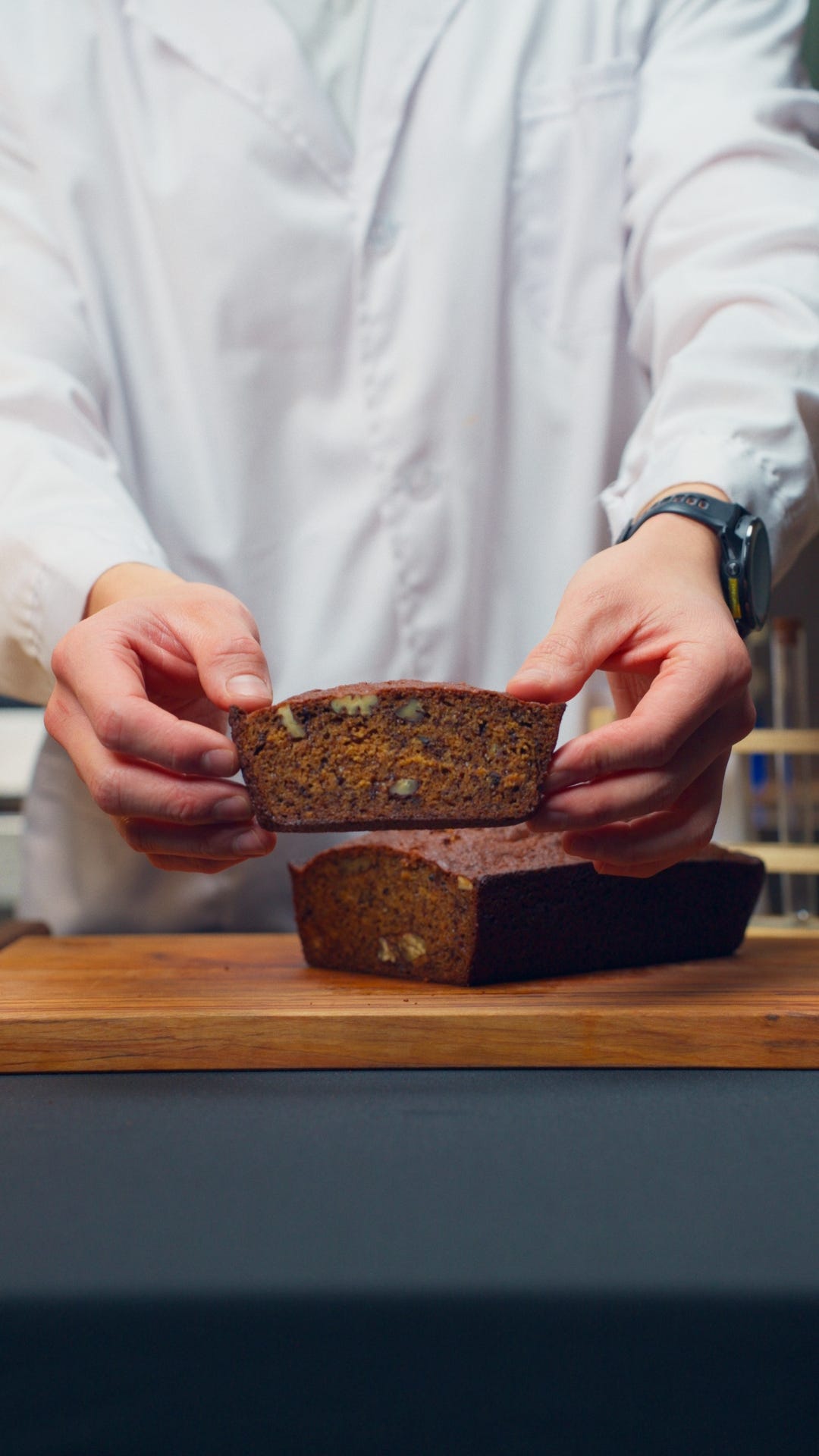
Science: As banana bread cools, starch retrogradation firms the crumb. Cutting too early releases steam and collapses structure.
Science citations:
McGee, Harold. On Food and Cooking: The Science and Lore of the Kitchen.
Dadzie, B. K., & Orchard, J. E. (1997). Routine post-harvest screening of banana/plantain hybrids.
Corriher, Shirley O. BakeWise.
Damodaran, S., Parkin, K. L., & Fennema, O. R. Fennema’s Food Chemistry.
McGee, Harold.
Corriher, Shirley O. CookWise.
Mine, Y. (1995). Recent advances in the understanding of egg white protein functionality.
Amazing recipe. Thanks!
Can oil be used in place of butter? Would that scientifically ruin it?